Bed bug thermal remediation relies on industrial electric or indirect-fired propane heaters that circulate dry heat continuously. Bed bugs (*Cimex lectularius*) experience lethal thermal breakdown when internal…
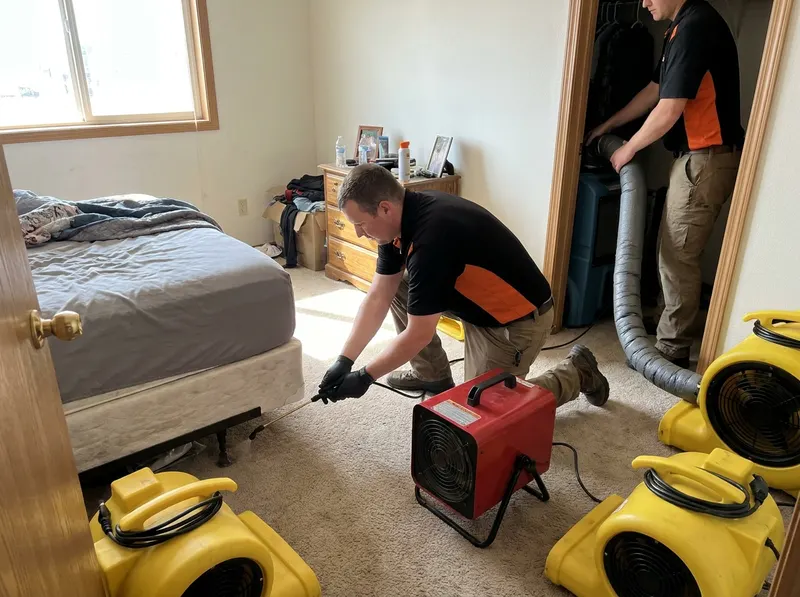
Bed bug thermal remediation relies on industrial electric or indirect-fired propane heaters that circulate dry heat continuously. Bed bugs (*Cimex lectularius*) experience lethal thermal breakdown when internal cellular proteins coagulate at 118 degrees Fahrenheit within 90 minutes, while 122 degrees Fahrenheit triggers immediate mortality in adults, nymphs, and eggs. Chemical knockdown serves as a critical defense perimeter during heating; without an active residual barrier applied to wall voids, plumbing chases, and sill plates, rising heat drives insects outward into cool cavities or adjacent rooms. Integrating cross-fire microencapsulated suspensions or amorphous silica gel desiccant dust eliminates fleeing individuals before they find structural cold spots. The operational trade-off of whole-home thermal treatment is site preparation rigor: homeowners must remove heat-sensitive items, including vinyl records, aerosol cans, wax candles, and oil paintings, yet the trade-off removes the need to discard high-dollar mattresses or furniture.
Building architecture across Pennington County dictates the operational parameters of every heat remediation job. In the historic lathe-and-plaster homes of the West Boulevard Historic District, deep wall bays and thick timber framing absorb BTUs slowly, requiring higher fan counts and prolonged soak times to breach the 120-degree threshold inside interior partitions. Conversely, ranch-style slab constructions in Robbinsdale, Valley Green, and South Park lose heat into concrete subfloors, demanding elevated downward airflow to eradicate insects resting along bottom plates. In elevated Black Hills foothill zones such as Skyline Pines, Red Rocks, Wildwood, and Colonial Pine Hills, ambient mountain humidity drops and colder evening drafts accelerate thermal loss through exterior walls, requiring exterior duct insulation and real-time remote thermocouple monitoring to verify lethal temperatures inside structural voids.
Executing bed bug eradication requires a structured, multi-phase sequence:
1. Pre-treatment thermal inspection: High-resolution infrared sensors locate high-density harborage zones and identify structural heat sinks.
2. Perimeter barrier application: Non-repellent chemical liquid knockdown and desiccant dust are injected into electrical switch plates, baseboard channels, and door casings.
3. Thermal equipment deployment: Industrial heaters and high-temperature axial air movers are positioned to eliminate microclimate cold spots.
4. Controlled heat soak: Ambient air is held between 122 and 135 degrees Fahrenheit for 6 to 8 hours while technicians monitor wireless thermal probes placed deep inside furniture and wall cavities.
5. Post-treatment verification: Infrared cameras rescan the structure to ensure uniform heat penetration, followed by cold-down ventilation and re-entry clearance.
Every job gets a firm, written price after a free on-site visit.
Tell us about your bed bug thermal remediation and chemical knockdown job in Rapid City and we'll send a clear, written quote, usually the same day.
 Denvirox Pest Management